The technology
Rethink the system. From the ground up.
A different relationship between the vehicle and the infrastructure that moves it.
01 / A coordinated architecture
The infrastructure
does more.
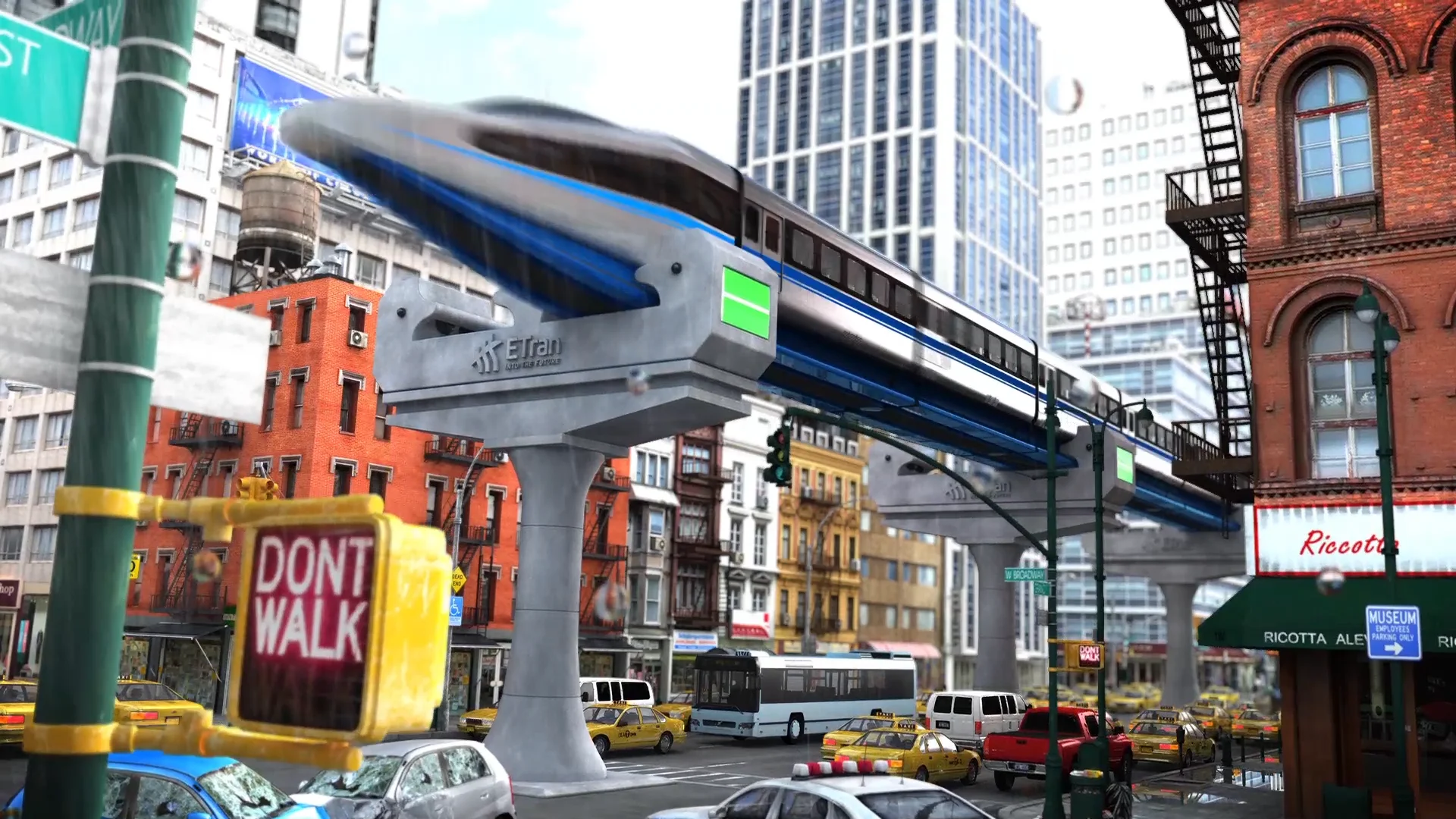
Unlike conventional elevated rail or monorail systems, ETran’s proposed architecture does not require a continuous longitudinal rail, beam, or guideway between support stanchions. Instead, the articulated vehicle itself spans the spaces between successive stanchions, which provide distributed support, propulsion, and guidance.
The fixed stanchions also host proposed functions associated with braking, power, and control. This is an architectural principle, not a completed engineering design: the vehicle structure, articulation, interfaces, and specific mechanisms must be developed and validated together.
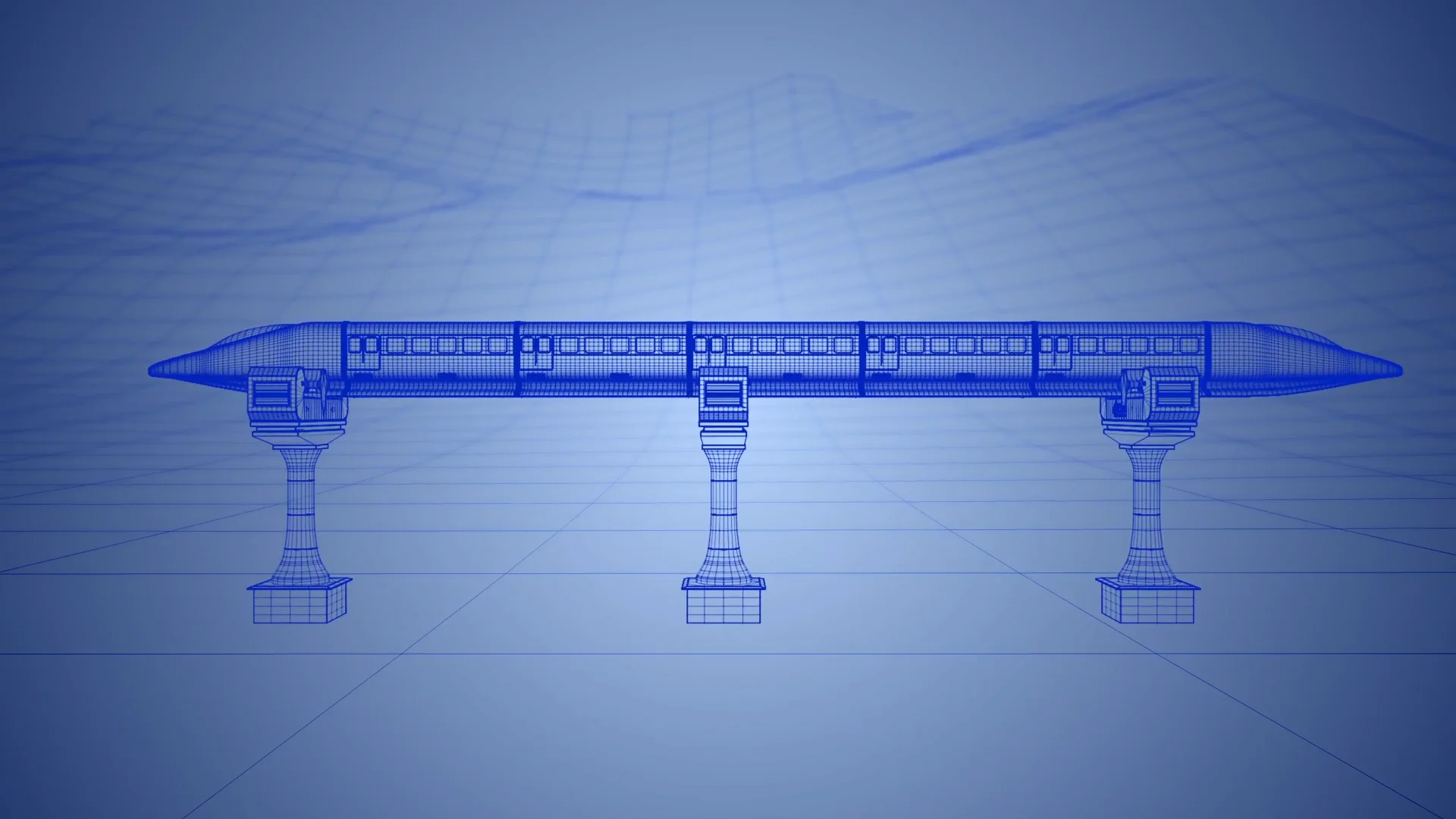 Vehicle and individual stanchions / Concept illustration; geometry and mechanisms remain subject to engineering development
02 / Infrastructure-based propulsion
Electric drive.
Along the corridor.
In the ETran concept, electric drive elements are integrated into the support infrastructure. The vehicle interacts sequentially with those elements as it travels.
Locating drive components in the infrastructure creates an opportunity to access and maintain them independently of the vehicle. Propulsion performance and durability remain subjects for engineering validation.
03 / Distributed support
Multiple points.
One continuous journey.
The concept studies use engagement with multiple stanchions, including configurations with at least three support points. The vehicle spans the gaps while loads transfer between successive stanchions; it is not carried by a continuous elevated beam.
Dynamic modeling and physical testing must establish the necessary spacing, load transfer, turning behavior, guidance, retention, and articulation. These requirements and mechanisms may evolve as engineering evidence develops.
04 / Modular development
Engineer the parts.
Validate the whole.
Propulsion, structural support, guidance, and control are conceived as subsystems that can be evaluated progressively. Findings from component tests can inform the integrated architecture.
Control strategies, safety systems, redundancy, manufacturing methods, and construction processes will evolve through this work.
The path to demonstrationA defined architecture. A clear engineering challenge. The next stage is to establish what the system can achieve.
The next chapter starts with a conversation
Let’s move
forward. Together.
Bring your engineering, industrial, or transportation expertise.
Help determine what ETran can become.