A DIFFERENT ARCHITECTURE FOR MASS TRANSPORTATION
Elevated. Electric. Infrastructure-Driven.Designed to simplify how mass transportation is built.
ETran is developing a patented transportation architecture combining lightweight vehicles, infrastructure-based electric propulsion, distributed support, and modular construction.
ETran is now seeking a strategic partner to help validate, demonstrate, and commercialize the technology.
Why Building New Transit Has Become So Difficult
Transportation infrastructure has become increasingly difficult and expensive to deliver. As projects grow in scale and complexity, they face longer development timelines, escalating construction costs, greater disruption, and increasing difficulty fitting new infrastructure into existing cities.
Many of these challenges are determined long before construction begins. Fundamental choices about system architecture determine how much structure is required, how much land must be disturbed, how existing roads and utilities are affected, and ultimately how difficult and costly a transportation system becomes to build.
ETran was conceived by stepping back from those assumptions and asking a different question: What if the transportation system itself were designed from the beginning to make the infrastructure simpler?
That question led to an elevated, lightweight, infrastructure-driven architecture intended to reduce ground-level conflict, simplify construction, and create a different path for delivering mass transportation.
Rethinking the Problem Before Designing the System
Conventional transportation systems are typically designed around the vehicle: how it is powered, how it travels, and how the infrastructure must support it.
ETran began from a different starting point.
Instead of asking how to improve an existing transportation architecture, ETran asked how the entire relationship between the vehicle and the infrastructure could be reconsidered.
The resulting concept shifts important functions from the vehicle into the infrastructure. Propulsion, support, guidance, braking, and control can be distributed along the transportation corridor, allowing the vehicle itself to remain comparatively lightweight while the infrastructure performs more of the work.
This approach led to four principles that define the ETran architecture:
.
Elevated by Design
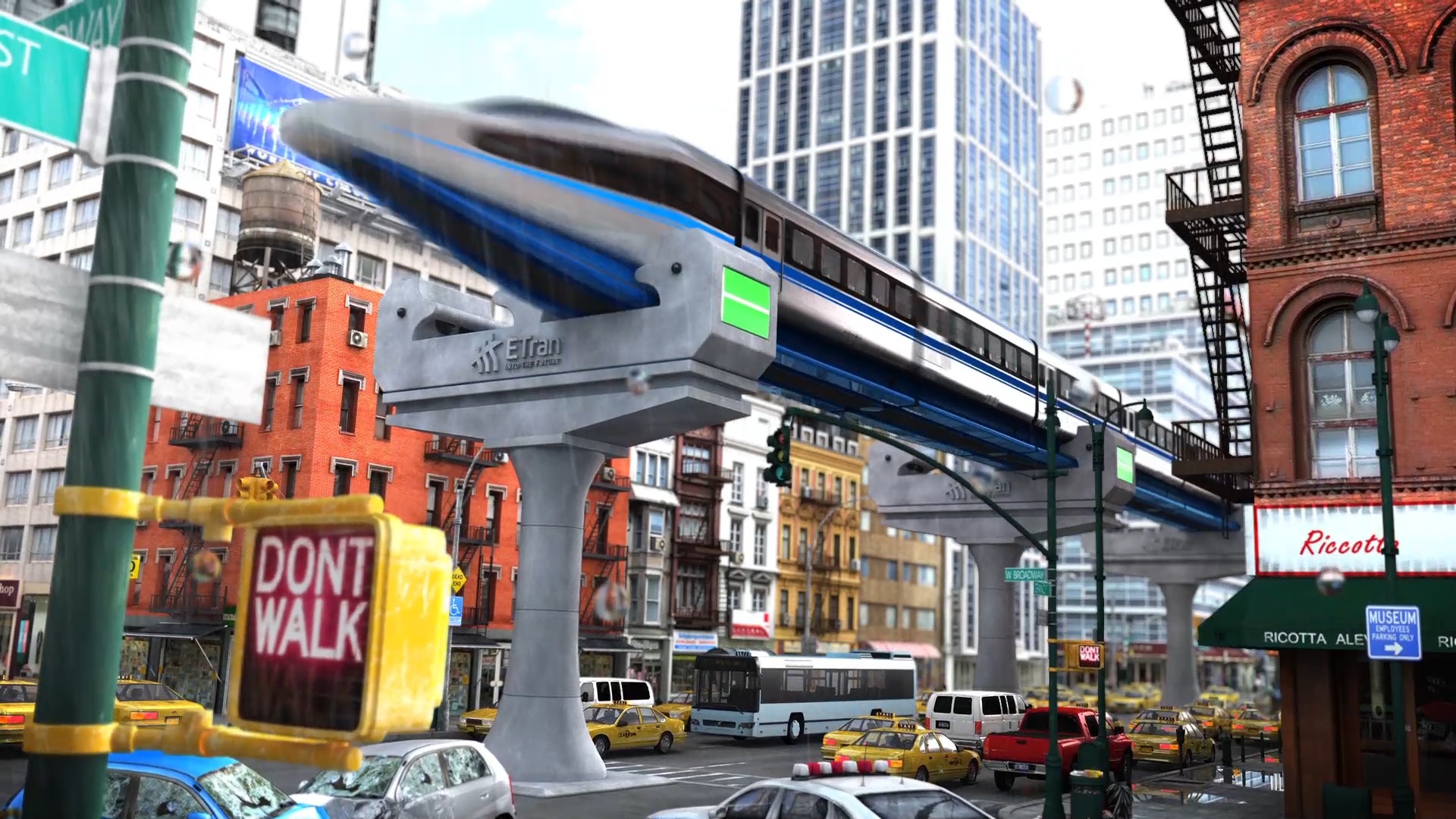
An elevated architecture designed to carry and guide vehicles above ground-level constraints.
Infrastructure-Based Propulsion
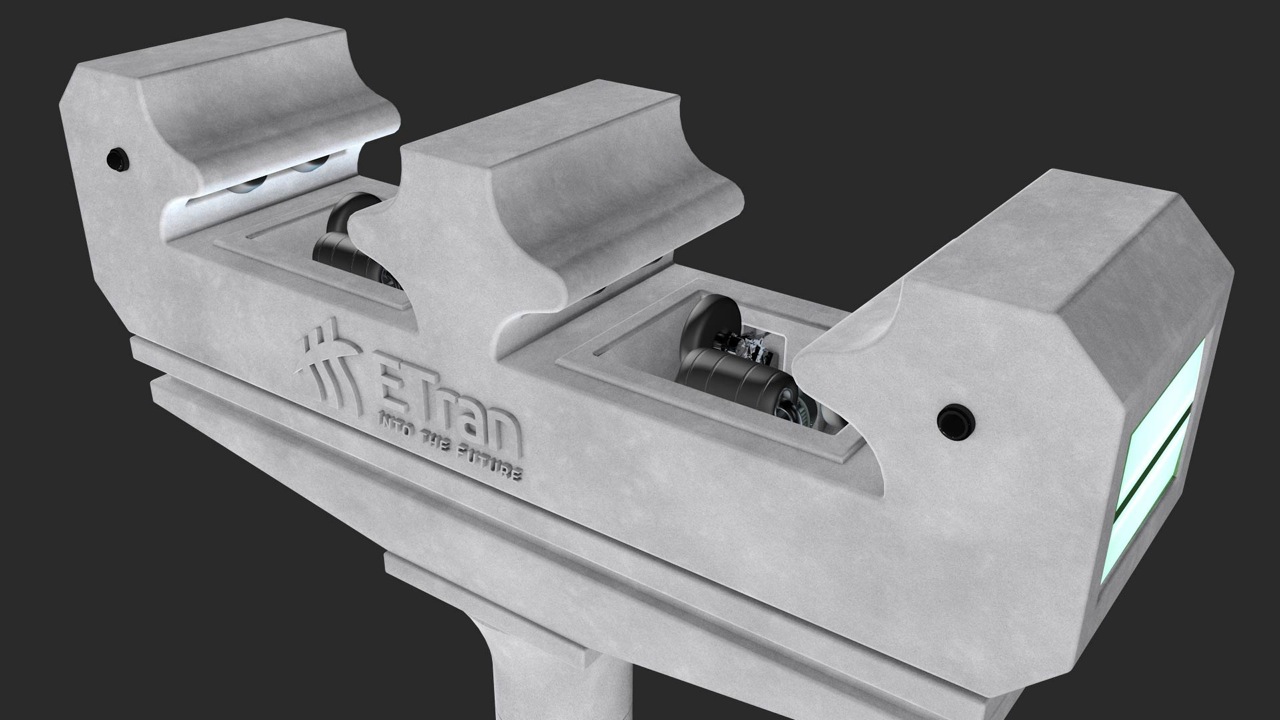
Distributed electric drive elements integrated into the support infrastructure rather than onboard the vehicle.
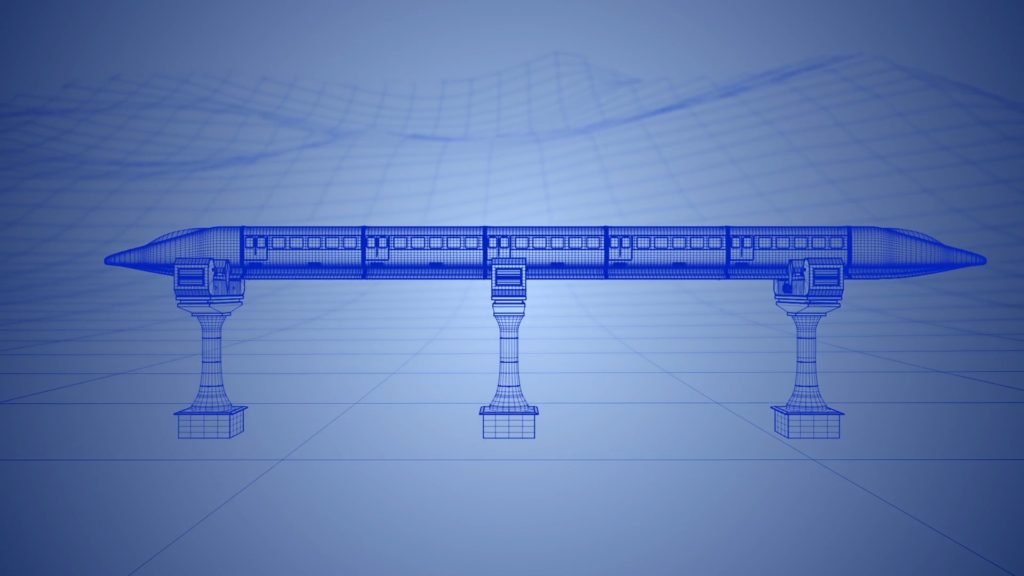
Lightweight Vehicle Architecture
Vehicles maintained through continuous engagement with at least three simultaneous support points.
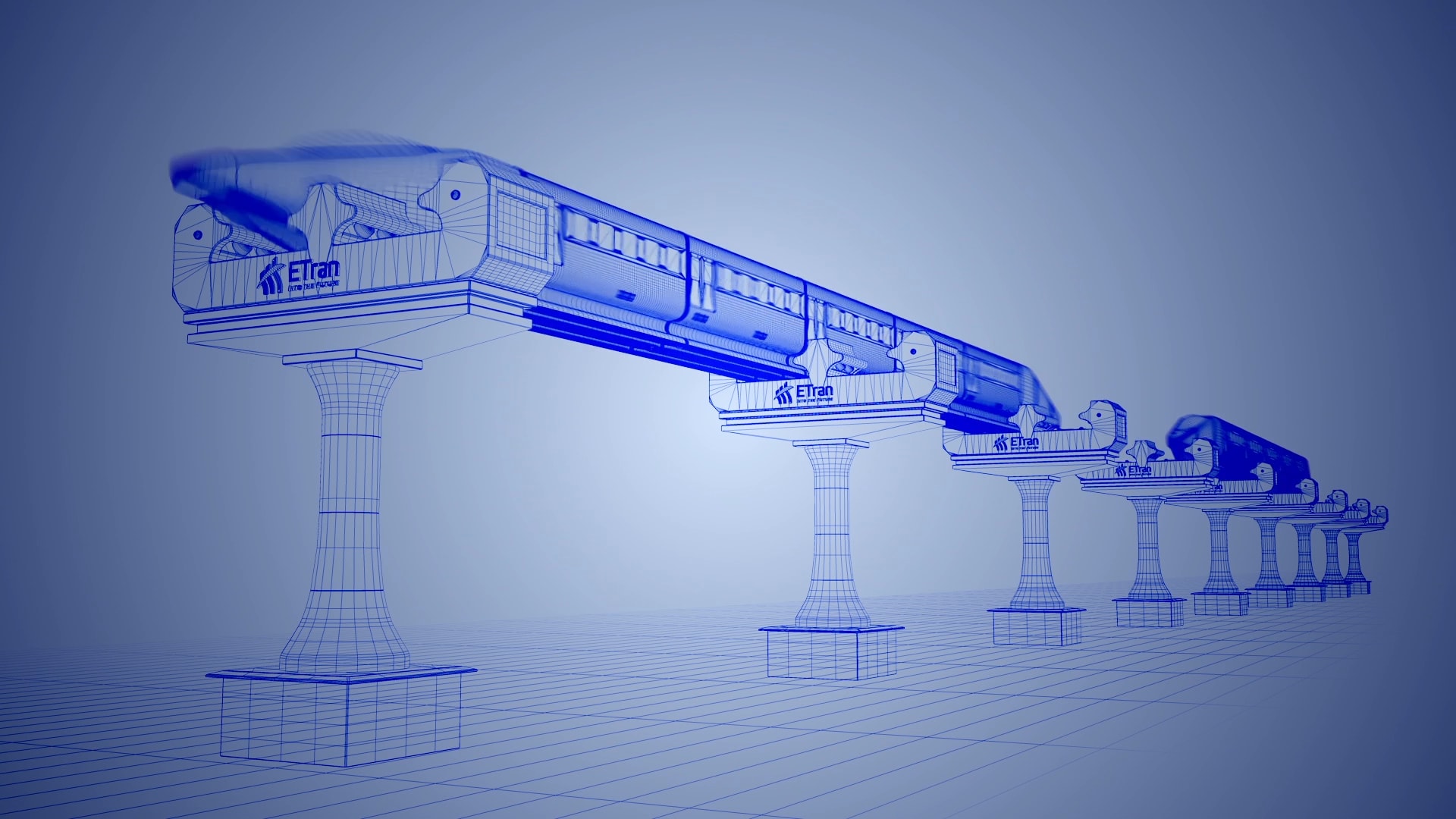
Modular and Distributed Infrastructure
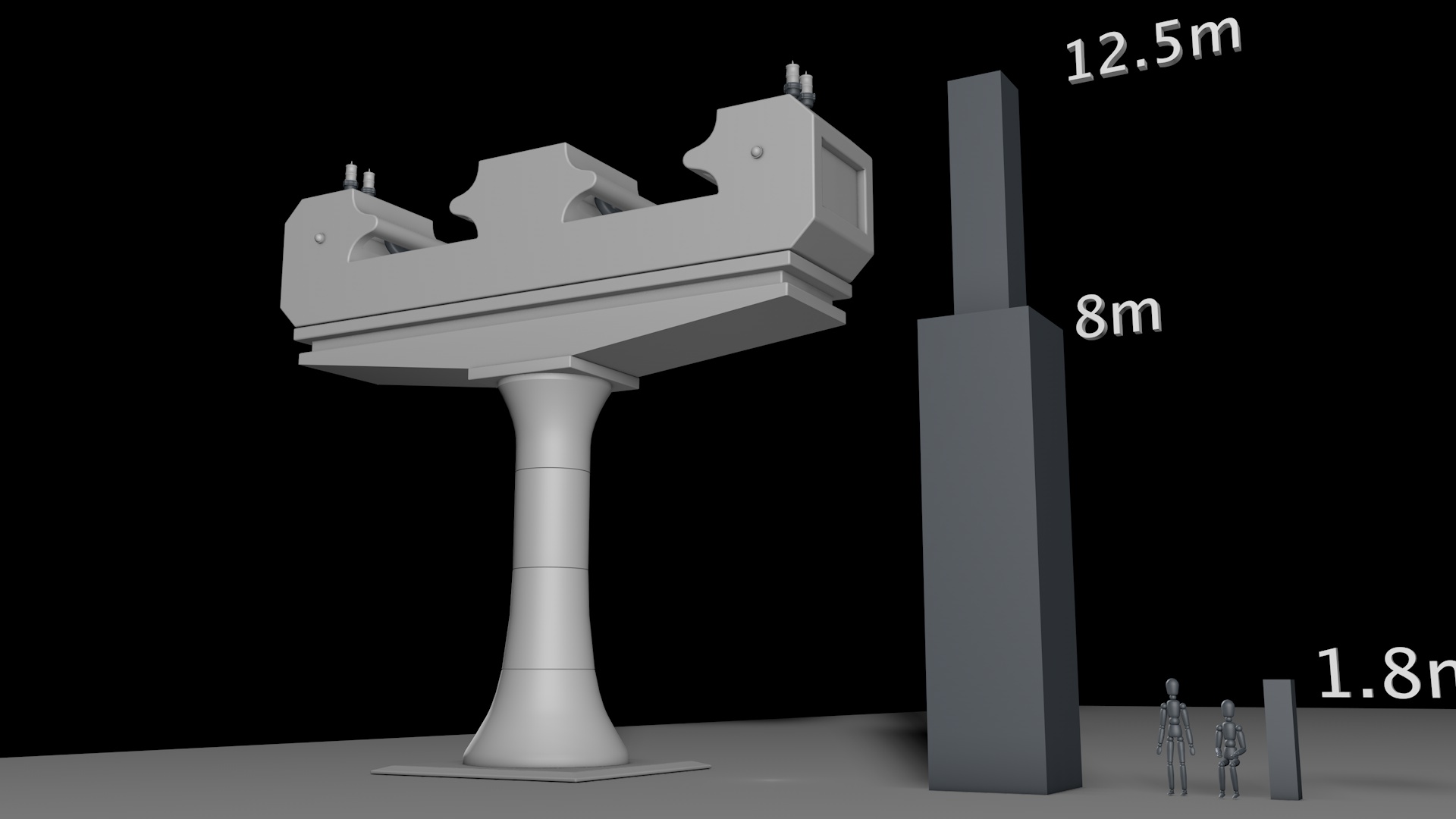
Stanchion elements conceived as modular infrastructure components distributed along the transportation corridor.
Conceptual System Overview
ETran brings these principles together in an integrated transportation architecture in which the vehicle and infrastructure operate as a coordinated system.
Lightweight passenger vehicles travel above existing ground-level activity while a distributed network of stanchions provides structural support and houses key propulsion, braking, guidance, power, and control functions.
Rather than carrying the full propulsion system onboard, the vehicle interacts sequentially with the infrastructure as it moves along the corridor. Multiple stanchions can engage and support the vehicle simultaneously, distributing loads while providing continuous controlled movement.
The architecture is intended to be modular and adaptable, allowing the same fundamental approach to be explored across different transportation applications, operating speeds, route lengths, and environments.
The objective is not simply to elevate a conventional train. It is to rethink how the vehicle and infrastructure work together as one transportation system.
What This Is — and What It Is Not
ETran is a patented transportation architecture at the development and validation stage.
WHAT EXISTS TODAY
✓ Patented System Architecture
✓ Independent Phase One Feasibility Work
✓ Defined Engineering Concept
✓ International IP Portfolio
✓ Preliminary Demonstration Concept
WHAT COMES NEXT
→ Dynamic Engineering and Simulation
→ Component and Subsystem Validation
→ Control and Safety Development
→ Integrated Demonstration System
→ Commercial and Operating Validation
ETran is not presented as a fully engineered or commercially proven transportation system. Dynamic behavior, system integration, control, safety, construction methods, and operating economics remain to be progressively engineered, tested, and validated.
That is precisely the purpose of ETran’s next stage.
The objective is to combine ETran’s intellectual property and system architecture with the engineering, manufacturing, transportation, and financial capabilities of a strategic partner to determine what the technology can become.
From Concept to Demonstration
ETran’s next major milestone is dynamic validation.
The technology has progressed through concept development, intellectual-property protection, and initial independent technical feasibility work. The next step is to move from analysis and static evaluation toward a progressively engineered and tested transportation system.
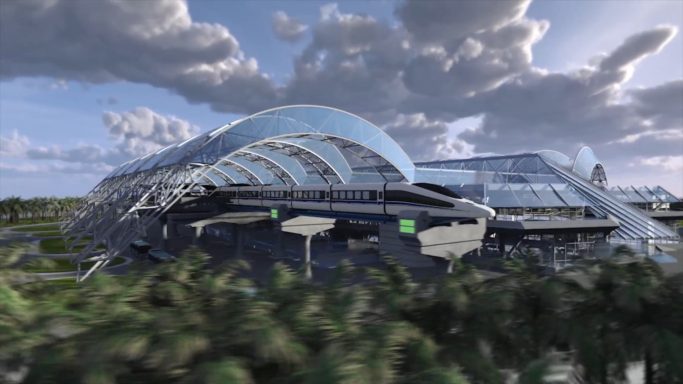
ETran envisions this process culminating in a full-scale demonstration system where the vehicle, infrastructure, propulsion, control, guidance, braking, and safety systems can operate together under real-world conditions.
The demonstration would provide the platform to validate engineering assumptions, collect operating data, refine the architecture, evaluate construction and maintenance requirements, and establish a credible basis for commercial deployment.
ETran does not intend to undertake this next stage alone.
The objective is to develop the demonstration program together with a strategic partner capable of bringing the engineering depth, industrial resources, manufacturing capability, transportation experience, and financial resources required to transform the architecture into an operating system.
The demonstration is not the destination. It is the bridge between a promising architecture and a commercially deployable transportation system.
1
CONCEPT & FEASIBILITY
Patents · Architecture · Phase One Study
↓
2
ENGINEERING & DEMONSTRATION
Dynamic Validation · Integration · Testing
ETRAN’S NEXT STAGE
↓
3
COMMERCIAL DEPLOYMENT
Applications · Projects · Licensing / Partnerships
Why ETran Is Worth Exploring
The need for better transportation infrastructure is not in question. What remains uncertain is whether today’s dominant approaches can deliver the capacity, accessibility, and connectivity cities and regions need at costs and timelines they can sustain.
ETran approaches that challenge from a different direction. Rather than attempting to incrementally improve conventional rail architecture, it reconsidered the relationship between the vehicle, propulsion system, supporting infrastructure, and the ground below.
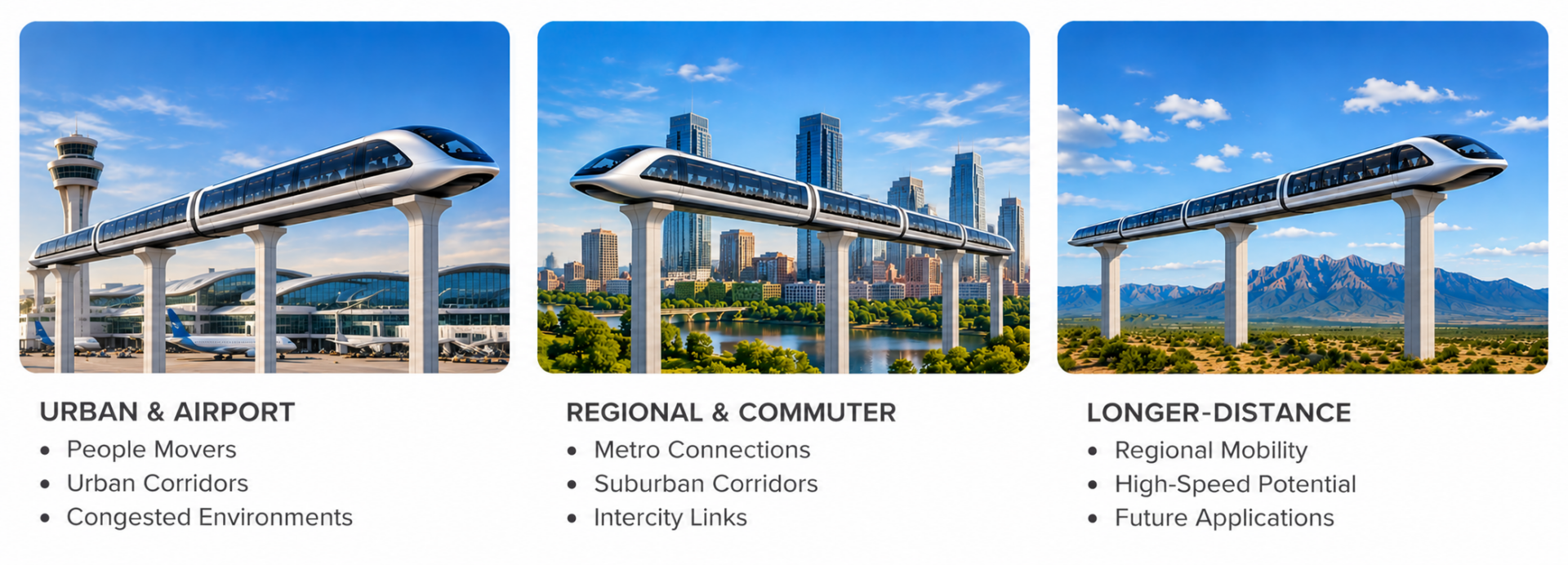
If the architecture can be successfully validated, its potential significance extends beyond any single transportation project. A lighter, modular, infrastructure-driven system could create opportunities across multiple transportation markets—from airports and urban corridors to regional and longer-distance applications.
That potential is what makes the next stage worth pursuing.
The question is no longer whether the concept is interesting. The question is whether rigorous engineering, dynamic validation, and the capabilities of the right strategic partner can determine what ETran can become.
Built on a Foundation of Development and Independent Review
PATENTED TECHNOLOGY
International patent protection across major markets
INDEPENDENT TECHNICAL REVIEW
Phase One feasibility study conducted by UT Austin’s Center for Electromechanics
DEFINED DEVELOPMENT PLAN
Concept → Engineering → Dynamic Validation → Demonstration
FOUNDER-LED DEVELOPMENT
Developed through sustained independent research, engineering exploration, and IP development
ETran has been developed deliberately and progressively, with intellectual-property protection, independent technical evaluation, and a defined path toward further engineering and validation. The next phase is intended to build on that foundation through collaboration with a strategic partner capable of bringing the additional capabilities required to move the technology forward.
A Strategic Partnership Opportunity
ETran is seeking a strategic partner to help take the technology through its next stage of development.
The ideal partner is not simply a source of capital. ETran is looking for an organization—or combination of organizations—with the engineering depth, industrial capabilities, transportation experience, and resources to critically evaluate the architecture and help determine the most effective path toward dynamic validation and demonstration.
ETran brings to that relationship the system concept, international intellectual-property portfolio, prior technical feasibility work, and a defined vision for how the technology could develop.
A strategic partner would bring the complementary capabilities required to turn that foundation into an engineered, tested, and ultimately commercially deployable transportation system.
The immediate objective is simple: begin the conversation with organizations capable of helping determine whether ETran can become the transportation platform it has the potential to be.
Start a Conversation
Interested in exploring ETran’s technology or strategic partnership opportunity?
ETran welcomes conversations with organizations and individuals who can contribute to the next stage of the technology’s development—from engineering and systems integration to transportation, manufacturing, infrastructure, investment, and commercialization.
If you see a potential fit, we would welcome the opportunity to begin a conversation.
contact@etran.systems